
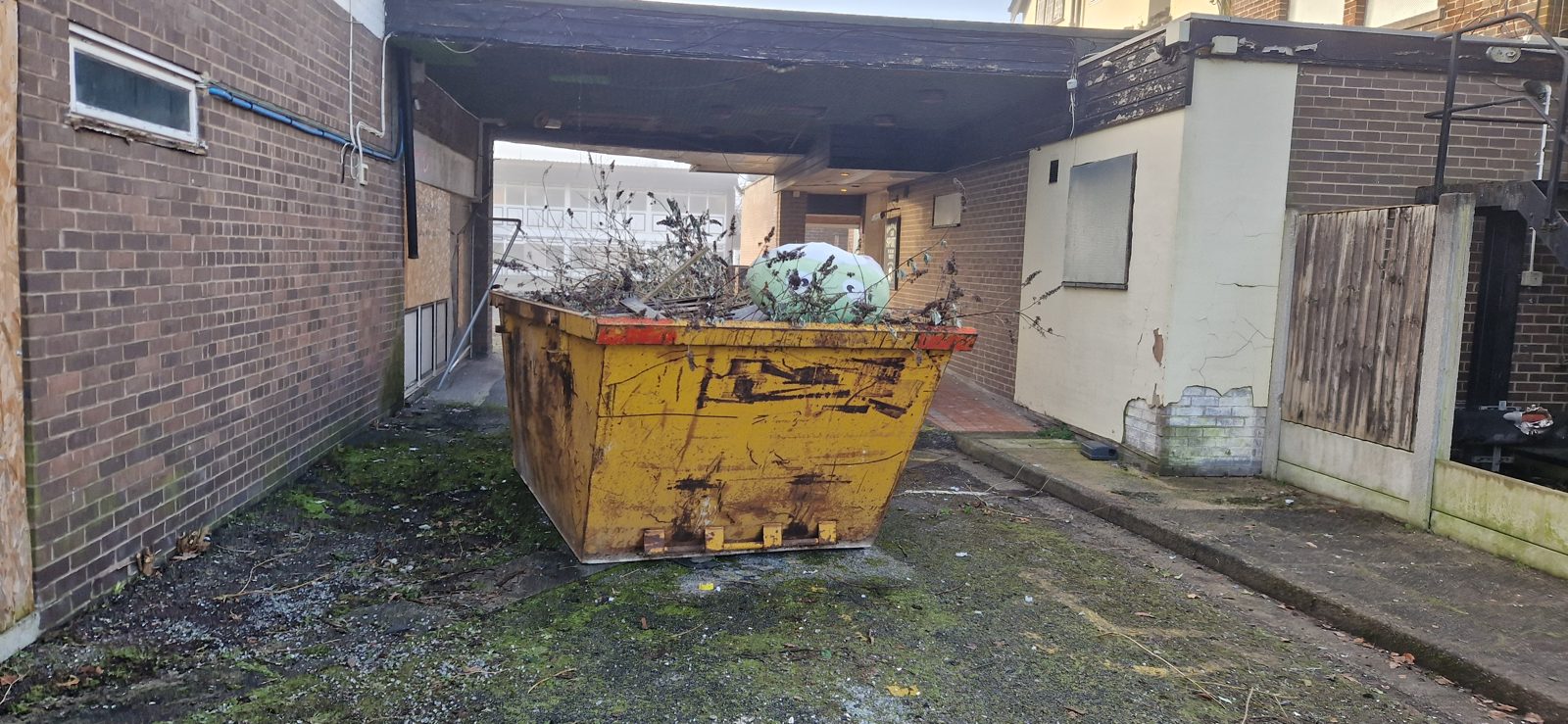
Recently, one of our officers was on duty at a client’s site when they spotted someone tipping a load of contractor waste into the client’s skip. They’d clearly assumed nobody was watching.
Somebody was. Our officer stopped them in the act and dealt with it there and then. The waste went back with the person who brought it, and the incident was logged and reported to the client. Job closed.
It raised a few smiles in the office. But it’s also a good example of something that catches plenty of businesses out. If nobody had been there, that waste would have been our client’s problem to clear, and our client’s bill to pay.
Who is responsible when waste is dumped on your land?
In most cases, you are. When waste is fly-tipped on private land, the landowner or occupier is responsible for removing it and disposing of it properly. Councils will investigate reports, but they are not obliged to clear private land.
If the waste is left and becomes a risk to public health, the council can take formal action against the owner or occupier. So ignoring it is not really an option.
There is a second layer of responsibility too. Once you clear the waste, you take on a duty of care for it. That means:
- using a registered waste carrier, and checking their registration with the Environment Agency
- getting a waste transfer note or receipt that describes the waste and names the carrier
- not burning it, which can be treated as illegal waste treatment
The person who dumped it can face a fixed penalty of up to £1,000, or an unlimited fine and up to five years in prison if convicted in court. But that only happens if they are caught and identified. In the meantime, the problem sits on your site.
What fly-tipping really costs a business
The clearance bill is only the start. For a business, the real cost usually comes from several directions at once:
- Clearance and disposal. You pay a registered carrier to remove the waste. If it’s mixed or hazardous, that costs more.
- Your skip, filled with someone else’s rubbish. A skip you hired for your own waste fills up sooner. You can end up paying for an extra collection, or for items the skip company won’t normally accept.
- Costs you rarely get back. Clean-up costs can generally only be recovered if a prosecution succeeds. Most offenders are never identified.
- Insurance questions. Not every policy covers fly-tipping clearance, so it’s worth checking yours before you need it.
- Time and disruption. Blocked access, staff time spent dealing with it, and the impression it gives visitors and customers.
It’s also more common than the headline figures suggest. Councils in England dealt with 1.26 million fly-tipping incidents in 2024/25, up 9% on the year before. Those figures don’t include waste cleared by private landowners, so the true picture for businesses is bigger.
Why business sites get targeted
Fly-tippers look for the same things every time: easy access, somewhere to put it, and nobody watching. Business premises often offer all three, especially out of hours.
- Open skips and bins. A half-empty skip is an invitation. It looks like the waste belongs there.
- Yards and car parks with open access. No gate, or a gate that’s left open, means a van can pull in and out in minutes.
- Quiet periods. Evenings, weekends and bank holidays, when the site is empty.
- Dark evenings. Once the clocks go back, there are more hours of darkness to work with.
- Vacant or partly used units. Nobody on site, and often nobody checking regularly.
- Construction and refurbishment sites. Skips and loose materials are already there, so extra waste is less likely to stand out.
Once a site has been used once, it’s more likely to be used again. Waste that’s left sitting signals that nobody is paying attention.
How to stop fly-tipping on your premises
No single measure stops it completely. The aim is to make your site harder to use and more likely to get someone caught. A practical checklist:
- Control access. Lock gates out of hours. Bollards, barriers or fencing can stop vans pulling in.
- Secure skips and bins. Use lockable lids where possible, keep skips inside the perimeter, and book collections promptly so they aren’t sitting full or half-full.
- Light it up. Motion-activated lighting around yards, loading bays and bin stores makes people think twice. Check timers when the clocks change.
- Use CCTV properly. Cameras help identify offenders after the event. They work best when someone is monitoring them and can respond in real time.
- Put up signage. Clear signs that the site is monitored, or protected by security, are a cheap deterrent.
- Clear waste quickly. Leaving fly-tipped waste in place encourages more of it. Remove it promptly, using a registered carrier.
- Get regular eyes on site. Physical checks out of hours, whether by staff, guards or mobile patrols, are the strongest deterrent of all.
- Work with your neighbours. If the business next door is being targeted, you probably are too. Share what you see.
What to do if you find fly-tipped waste
If you find waste on your site:
- Don’t handle it or search through it. It could contain sharp, chemical or other hazardous items.
- Record it. Take photos and note the date, time, location and what the waste is. Note anything that might identify who left it, such as paperwork, a vehicle or CCTV footage.
- Report it to your local council. Even on private land, the report helps build a picture and supports any prosecution.
- Arrange removal through a registered waste carrier. Keep the waste transfer note and every receipt in case you can recover costs later.
- Fix the gap. Work out how they got in and what made your site attractive, then close it off.
If you see someone fly-tipping, don’t confront them. Stay safe, note what you can (vehicle, registration, description, time), and call the police: 999 if a crime is happening right now, or 101 if not.
Our officer could step in because that’s exactly what they’re trained and licensed to do on site. For everyone else, your safety comes first.
How security helps

CCTV is useful, but most of the time it tells you what happened after the event. The skip story only ended well because someone was actually there to see it and deal with it.
That’s where the right security cover earns its keep:
- Manned guarding puts a trained, SIA-licensed officer on site, so problems are challenged as they happen rather than discovered the next morning.
- Mobile patrols give sites near us in Greater Manchester regular, unpredictable visits out of hours, including checks on gates, skips and bin stores.
- Monitored CCTV means someone is watching and ready to respond, not just recording.
- Live reporting on every visit and incident, so you can see what was checked, what was found and what was done about it.
Whatever the setup, the goal is the same: your site stops looking like an easy target.
Want to talk it through? Book a 15-minute call. Tell us about your site and we’ll tell you how we’d cover it. No hard sell.
Sources
- Fly-tipping statistics for England, 2024 to 2025 (Defra)
- Fly-tipping on private land (Slough Borough Council)
- Fly-tipping: advice for landowners (Dover District Council)
- Fly-tipping penalties and duty of care (Hampshire County Council)