
The 2am phone call
It’s two in the morning in late November and your phone is ringing. It’s the alarm company. The intruder alarm is going off at the unit, and you’re first on the keyholder list.
So you get up, scrape the ice off the car and drive over on your own. You pull up outside a dark building, let yourself in, silence the alarm and walk round with your phone torch trying to work out what set it off.
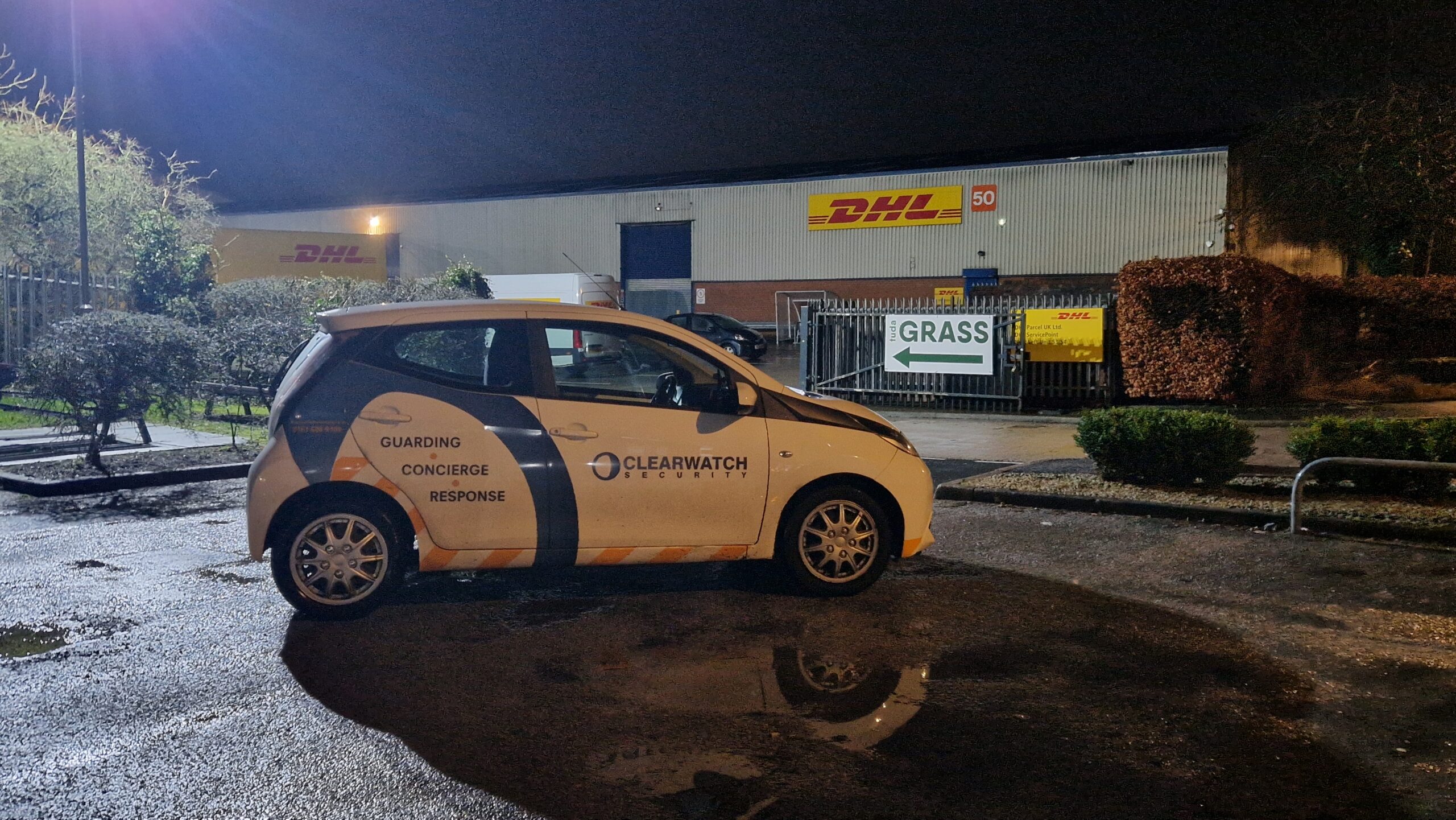
Most nights it’s nothing much. A shutter rattling in the wind, or a sensor picking up something it shouldn’t. But not every night. Our own officers have turned up to find fencing cut, tools left by the main doors and, on one site, intruders who only ran off when they heard our patrol arrive. So it’s worth asking a simple question. Should anyone be going to a call-out on their own?
What being a keyholder actually involves
A keyholder is the person the alarm company rings when your alarm goes off, and the one who’s expected to go to site and deal with it. We’ve walked through the whole chain of events in what happens when your business alarm goes off.
If your alarm is monitored with police response, the police have their own expectations as well. Under the National Police Chiefs’ Council (NPCC) requirements, a monitored site needs at least two keyholders. Both should know how to work the alarm, answer the phone at night and be able to get to site within 20 minutes, whatever the hour. If one of them is on holiday or off sick, someone else has to cover, and a key safe on the wall doesn’t count.
Getting this wrong has consequences. If nobody turns up when asked on two occasions in a rolling 12 months, police response can be withdrawn for three months. Too many false alarms carry a similar risk, which we looked at in our post on why storms set off business alarms. The NPCC updated its requirements in 2025, so it’s worth checking the current terms with your alarm company.
And even with full police response, attendance isn’t guaranteed. It depends on what else is happening that night. More often than not, the keyholder is the first person through the door.
Why going alone is the risky part
Because most activations turn out to be false, it’s easy to stop taking them seriously. But think about what a lone keyholder could be walking into.
An alarm that’s just gone off can mean someone is still inside, or waiting nearby to see who turns up. We’ve written before about how intruders think, and watching a site to see how quickly anyone responds is part of it. If you’ve never had any training in dealing with conflict, that’s not something you want to find out about with a torch in your hand.
Then there’s the fact that nobody knows where you are. Slip on ice in a dark yard or get hurt inside, and it could be morning before anyone notices.
The drive is a risk in itself, especially when you’re tired and the roads are icy. And the person who was out at 2am is usually still expected in at 8. A few call-outs in a week and people get worn down, which is when corners start getting cut. The alarm gets reset, the walk-round gets skipped and everyone goes back to bed.
What the law says about sending staff alone
Working alone isn’t against the law. But if you ask an employee to respond to alarms, their safety while they’re doing it is your responsibility.
The Health and Safety Executive expects employers to assess the risks of lone working and put controls in place before the work starts. If you have five or more employees, the significant findings need writing down. Its guidance on protecting lone workers says employers should provide training, supervision, monitoring and support, and it now has a section on work-related violence. Walking into a possible break-in falls squarely into that.
The guidance is also clear that some work shouldn’t be done alone at all, if the controls needed to keep someone safe aren’t good enough.
There’s the employment side to think about too. A call-out usually counts as working time, so it needs paying properly and fitting around rest breaks.
This isn’t legal advice. If you’re not sure where your business stands, have a word with your health and safety adviser.
If your own staff are keyholders, make it safer
Using your own people can work well, particularly for smaller sites in busy areas, with staff who live nearby and an alarm that rarely goes off. If that sounds like you, a few simple rules make a big difference.
- Don’t go in alone. Agree that two people attend, or that whoever goes waits outside for the police or a security response.
- Check before setting off. Ask the alarm company which zone triggered, and if you have remote CCTV, look at the cameras first.
- If there are signs of entry, stay outside. A broken window, forced door or cut fence means calling 999 and waiting. Nothing in the building is worth getting hurt over.
- Tell someone when you arrive and when you leave. A quick phone call or a lone worker app means somebody will notice if you go quiet.
- Keep the keyholder list up to date. At least two names, numbers that actually get answered at night, and cover sorted for holidays and Christmas.
- Sort out the false alarms. Every one is another night out of bed, and they all count towards losing police response.
Or hand the call-out to a professional
The other option is a keyholding and alarm response service. The alarm company rings the security provider instead of your staff, and a trained officer goes out, checks the site, deals with whatever they find and locks up again. If you’re weighing it up, we’ve written about the benefits of keyholding for small businesses.
This is how the two options usually compare.
| Your own staff | Professional keyholding | |
|---|---|---|
| Who goes | Whoever is on the list and picks up | A trained, SIA-licensed officer |
| Trained to handle trouble | Usually not | Yes, and knows when to wait for police |
| Lone working risk | Stays with you as the employer | Managed by the security company |
| Holidays and Christmas | Cover has to be arranged | Covered all year round |
| Record of what happened | Often a phone call the next morning | A report with times, findings and actions |
| Cost | Call-out pay and lost sleep | An annual fee plus a charge per call-out |
Keyholding provided under contract is a licensable activity under the Private Security Industry Act 2001, so whoever you use, check that their officers hold the right licence from the Security Industry Authority. Ideally the company should be an SIA Approved Contractor too. Clear Watch is approved for both security guarding and keyholding.
Plenty of businesses pair keyholding with mobile patrols or vacant property inspections over quieter periods, so the site still gets checked even when the alarm stays silent.
Shutting down for Christmas?
The festive break is when sites sit empty for longest and keyholders are hardest to get hold of. We’ve put together a few more reasons Christmas is a risky time for businesses. If you’d rather nobody on your team gets that 2am phone call this year, talk to us about keyholding and alarm response. We cover Oldham, Manchester and the wider North West.
Frequently asked questions
Should a keyholder go to an alarm call-out alone?
Ideally not. On your own, you could walk in on a break-in with no backup and nobody knowing where you are. Go in pairs, wait outside for the police or security, or use a professional keyholding service.
How many keyholders does a business need?
For a monitored alarm with police response, the NPCC requirements ask for at least two. They need to know how to use the alarm, be reachable by phone and be able to get to site within 20 minutes.
What happens if no keyholder attends?
If keyholders don’t attend when asked twice in a rolling 12 months, police response can be withdrawn for three months.
Can I make an employee be a keyholder?
You can ask, but you’re responsible for their safety while they respond. That means a lone working risk assessment, training, a way of checking they’re safe and proper pay for call-out time.
What should a keyholder do if they see signs of a break-in?
Stay outside, keep a safe distance and call 999. Don’t go in to investigate.
Does a keyholding company need a licence?
Yes. Keyholding under contract is licensable under the Private Security Industry Act 2001, so the officers need the right SIA licence.